Press & media
Press kit: Sidereal Clocks
The story, the facts and images you are welcome to use. For interviews, more images or a live walk-through of the clocks, write to concierge@siderealclocks.com.
The story in brief
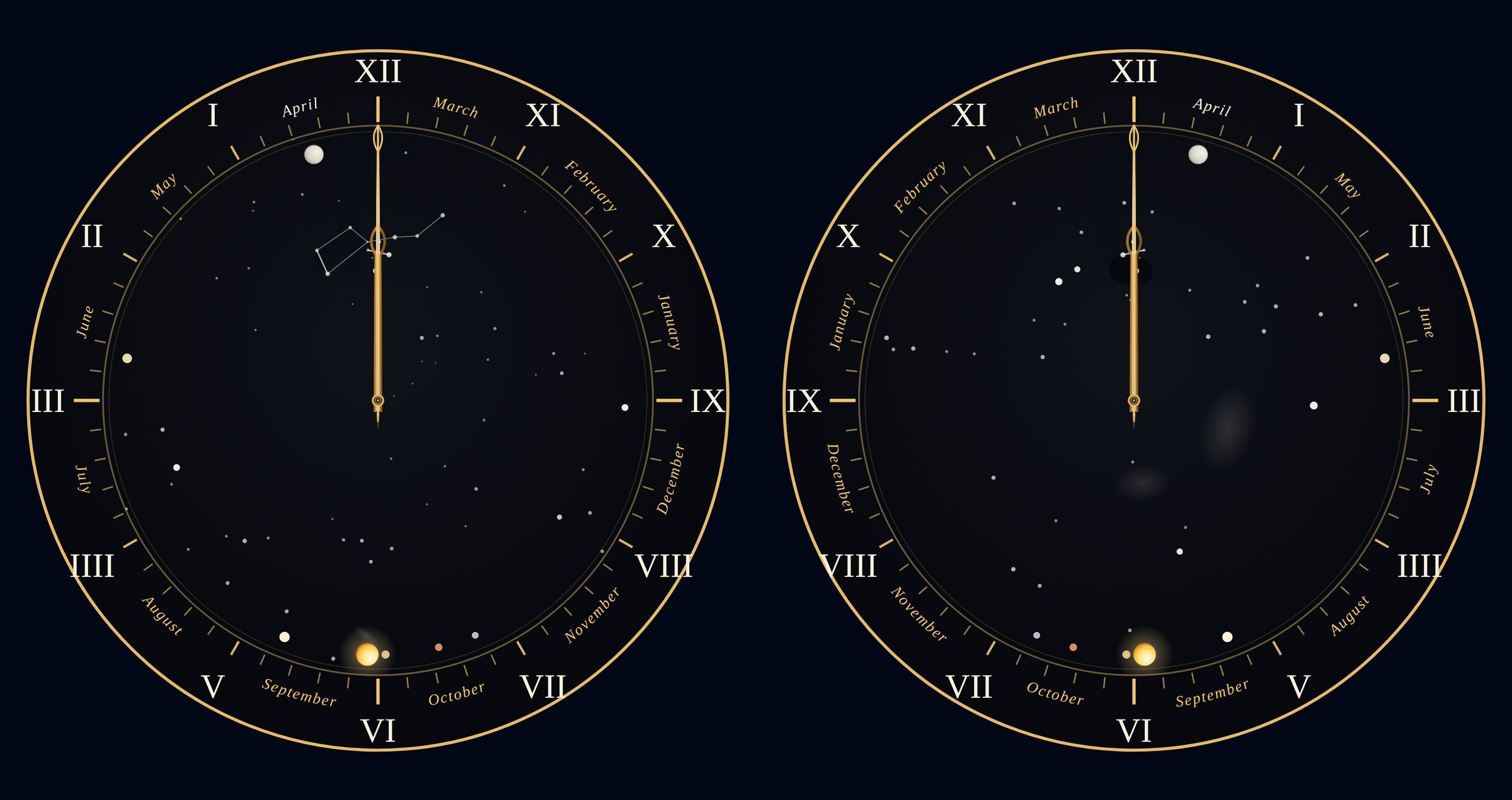
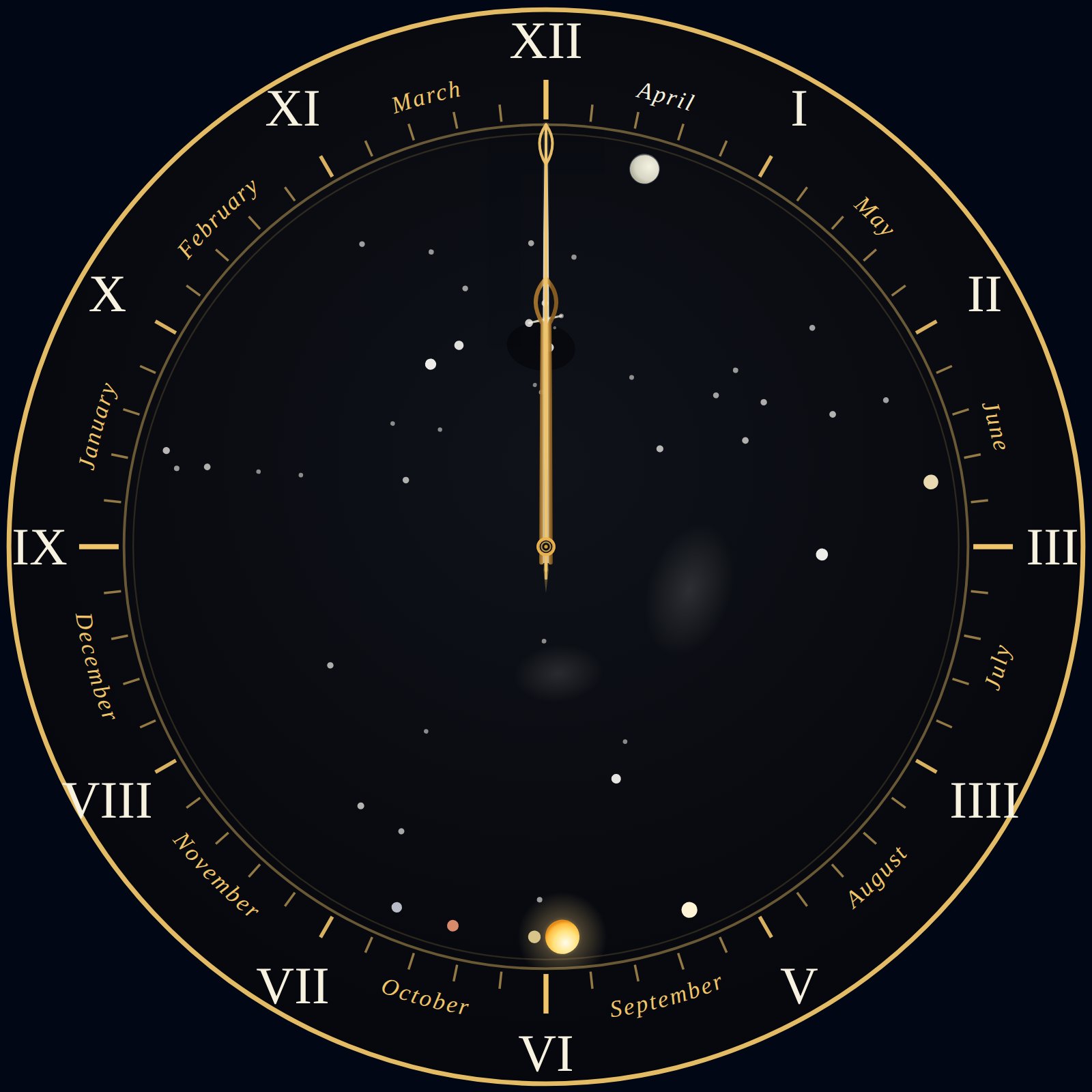
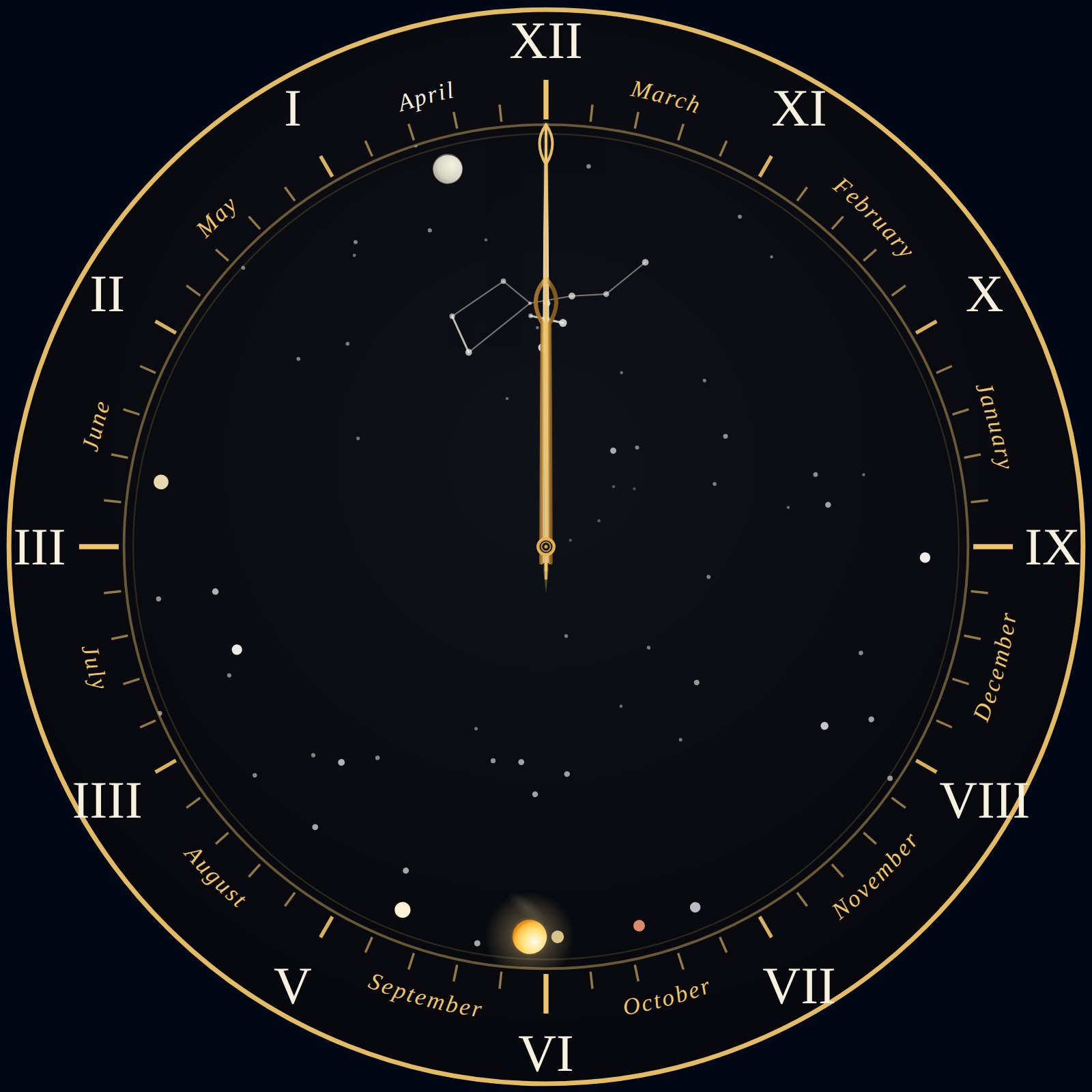
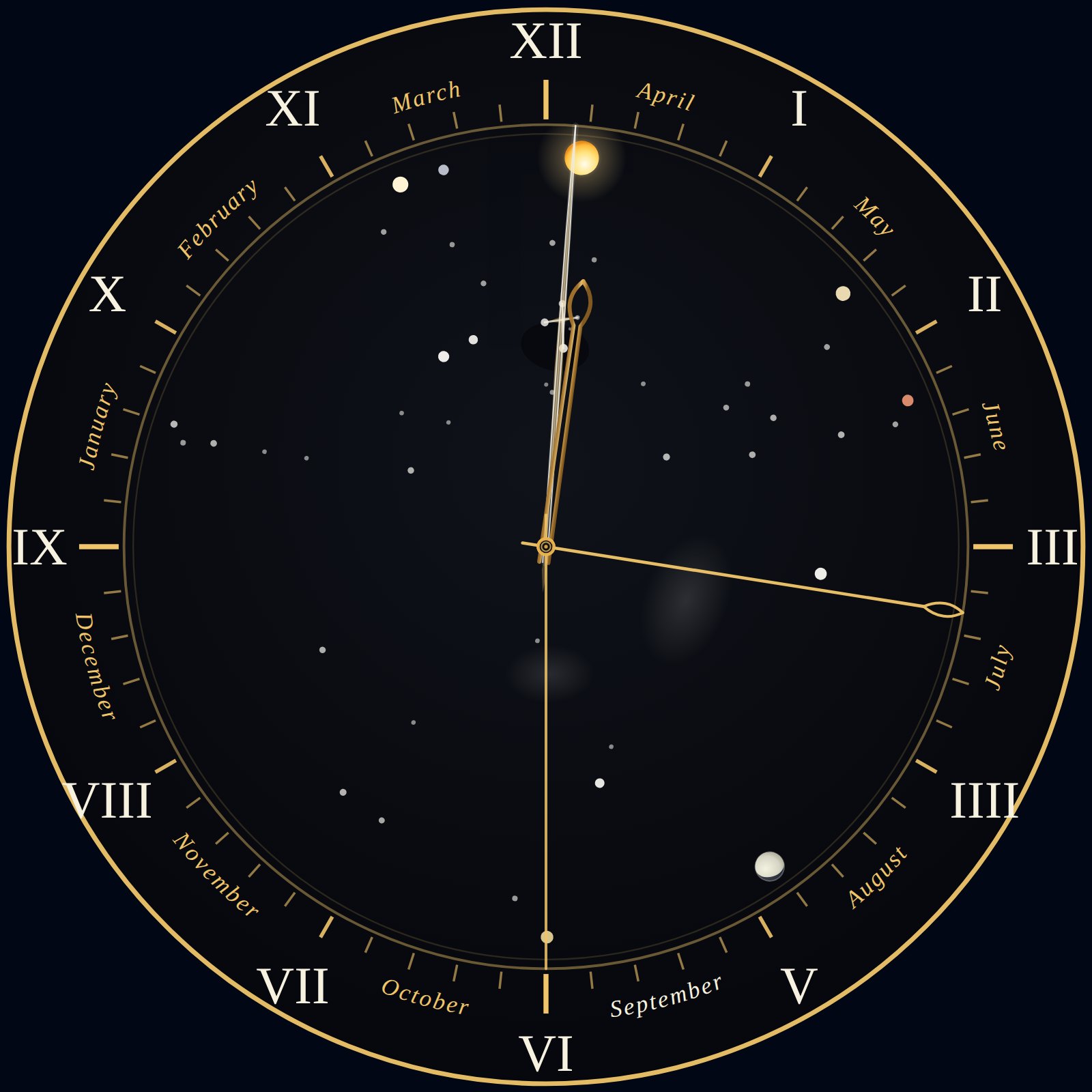
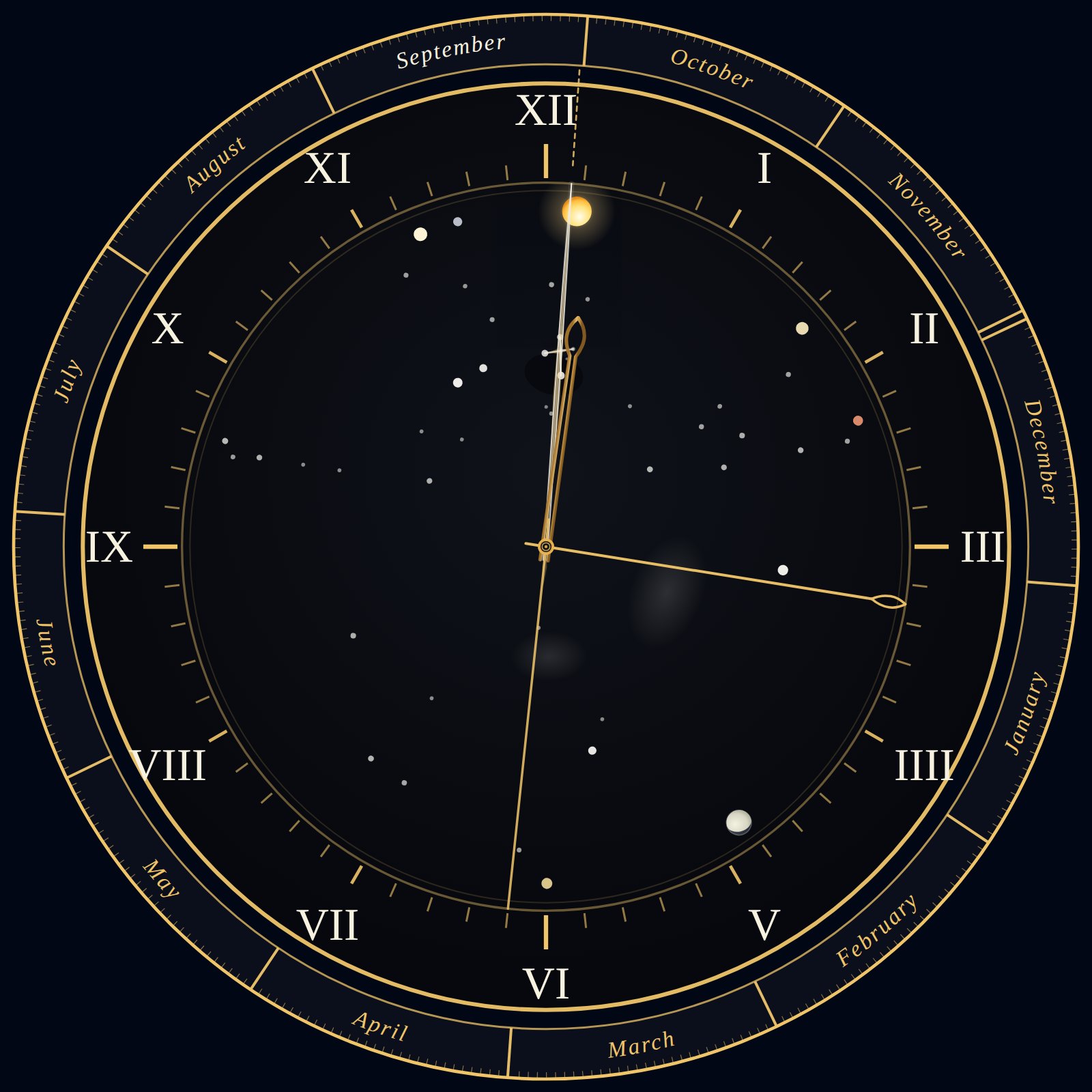
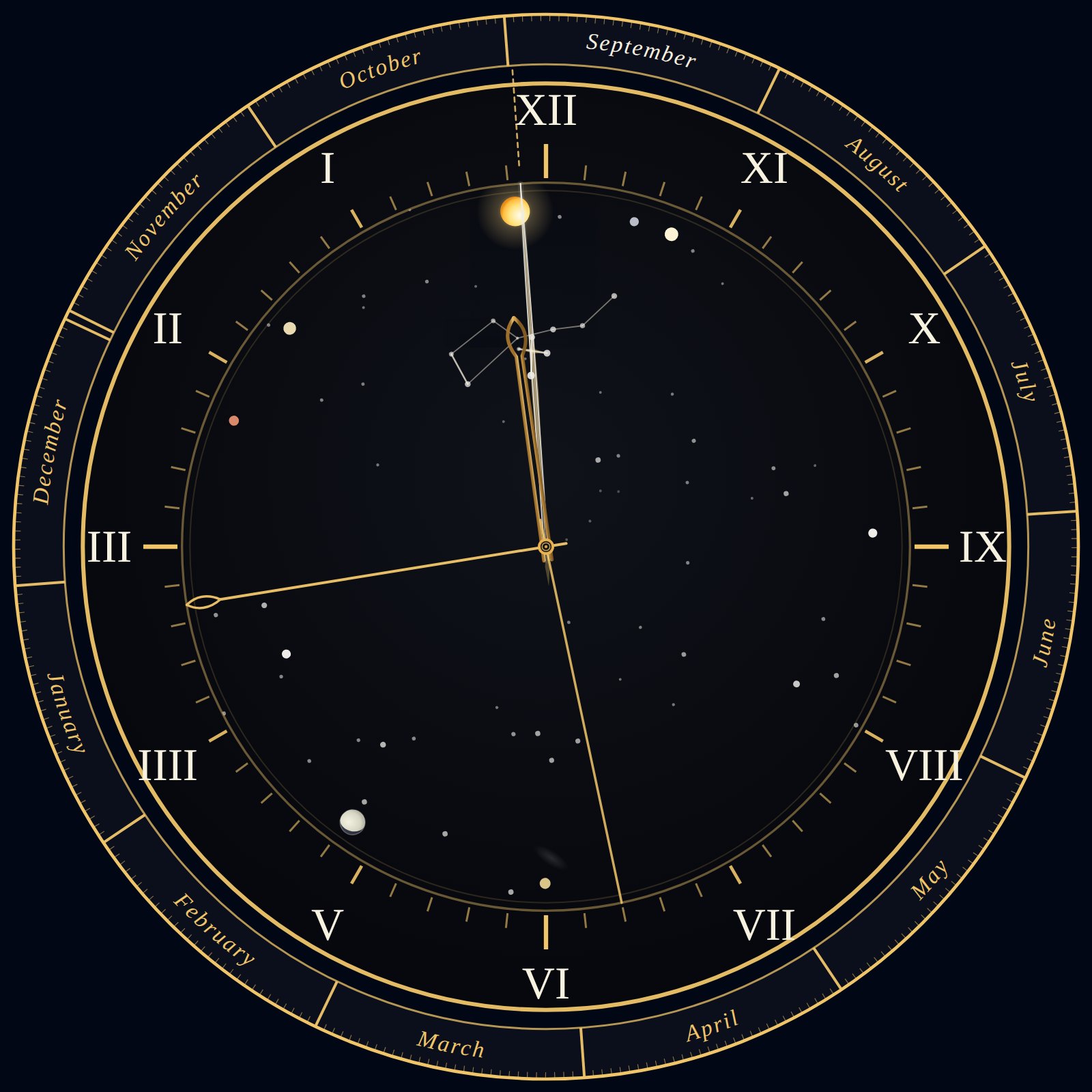
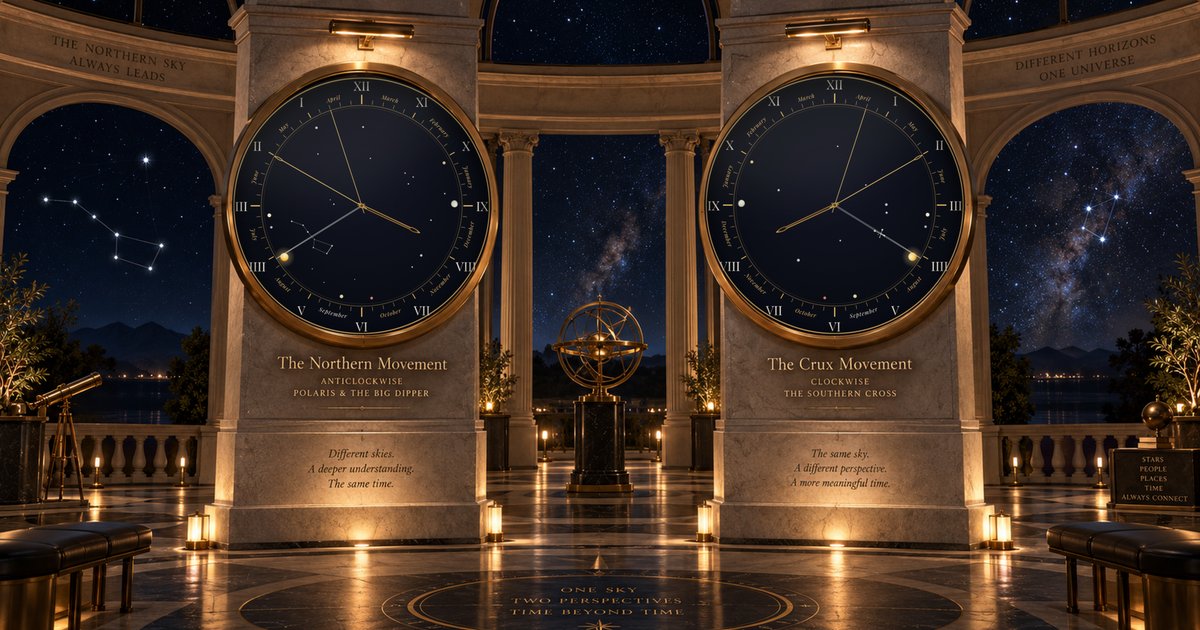
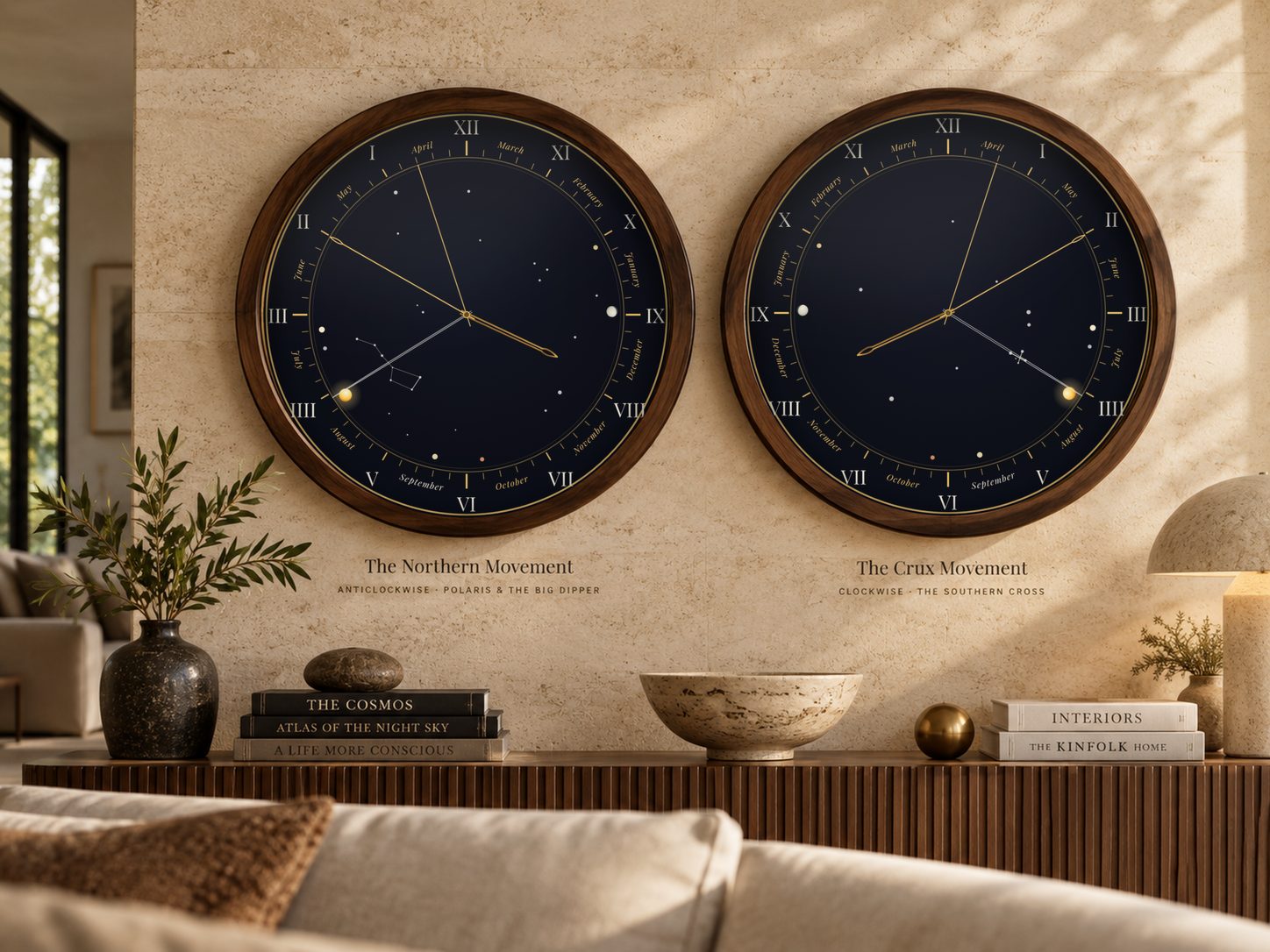
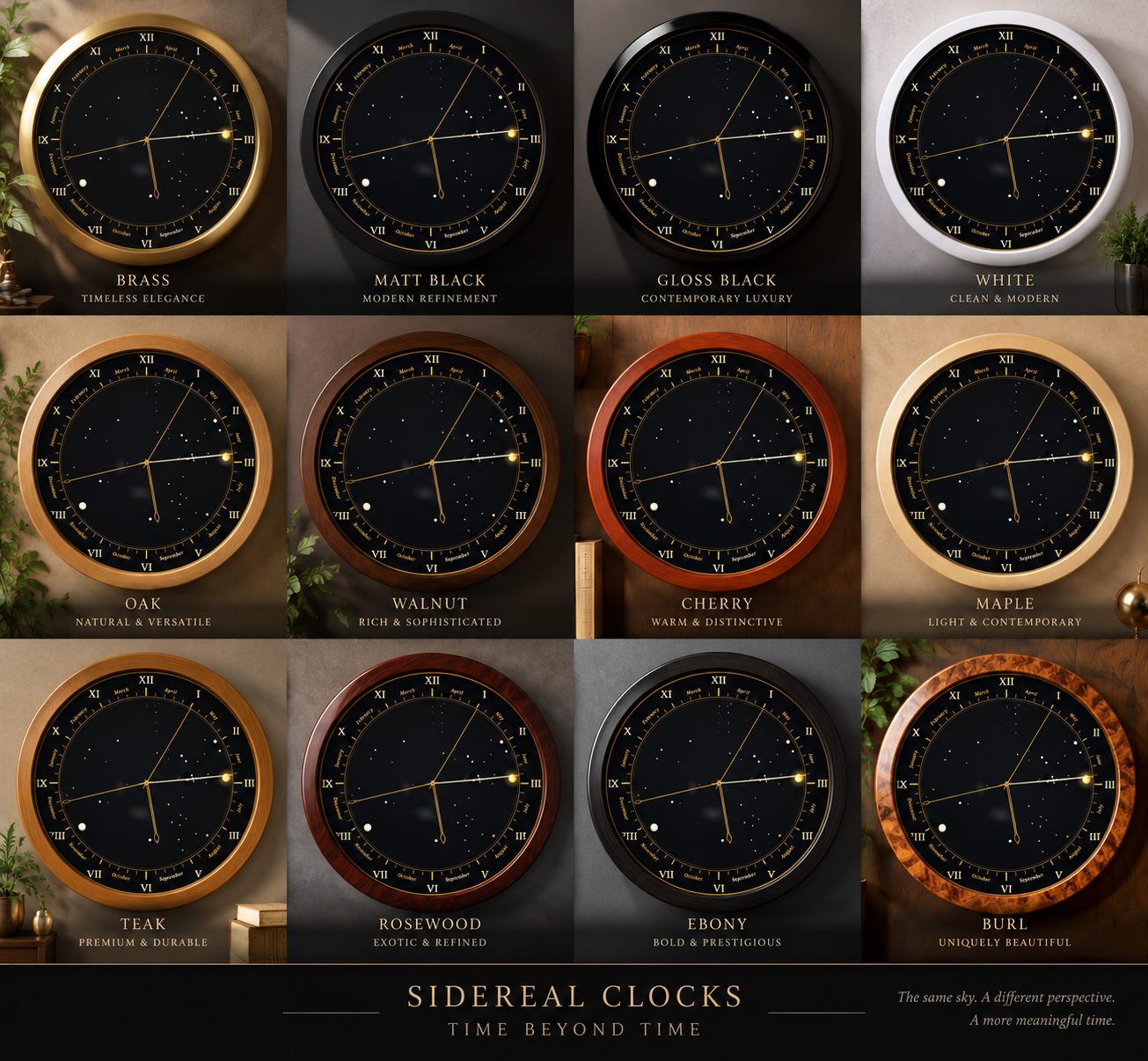
Sidereal Clocks is an Australian design house making architectural astronomical wall clocks whose fourth hand is the Southern Cross. A familiar twelve-hour face sits over the live night sky, and one needle runs from the south celestial pole through the Cross, turning with the stars. At midnight, the Cross points to the month: the clock is both a timepiece and a calendar kept by the sky. A mirrored Northern face turns around Polaris and the Big Dipper, so the pair reads one sky from both ends of the Earth.
Every clock was calibrated to a single moment: at standard-time midnight ending 31 March 2026, on a meridian through Cumnock, New South Wales, at the latitude of the Parkes radio telescope, the hand read exactly zero. Every time zone has one such meridian, from Amesbury beside Stonehenge to Washington, D.C. and the Okayama Observatory in Japan: twenty-four places where the clock and the sky began together.
Fact sheet
- Company
- Sidereal Clocks, New South Wales, Australia. Founded 2026 by William Turner.
- Product
- Architectural astronomical wall clocks: a live display in a fine frame. One clock can wear several faces; see The Faces.
- The hand
- One line from the south celestial pole that splits the angle between the stars Acrux and Gacrux exactly in half, turning once every 23 hours 56 minutes 4 seconds.
- The zero moment
- 00:00 standard time, 1 April 2026 (the midnight ending 31 March), on the meridian through Cumnock, NSW (148.6393° E), 35 km due east of the Parkes Dish.
- Meridians
- Twenty-four midnight-zero meridians, one per time zone, about 15.04° apart because a sidereal day is four minutes shorter than a solar day.
- Faces
- Seven faces in five mirrored pairs, including a month bezel that turns once a day so the Cross hand always points at today’s date.
- Time
- Standard time all year: the sky keeps no daylight saving, and neither do the clocks.
- Editions
- 600 mm Salon, 900 mm Architectural and the Twin Clocks. Physical editions are at the prototype-specification stage and are not yet for sale; interest can be registered on the website.
- Proved in public
- The instruments first ran live at CalculationTime.com. Sun, Moon and planet positions come from Astronomy Engine (Don Cross, MIT licence).
- Contact
- concierge@siderealclocks.com
From the founder
“If you have a wall, a room or a building that should keep the sky, I would be glad to hear from you.”
William Turner, founder, Sidereal Clocks
Story angles
- A clock whose hand is a constellation. The Southern Cross, the stars on Australia’s flag, turned into the fourth hand of a clock.
- Twenty-four places where time began together. One meridian in every time zone where the clock read zero at the same local midnight: Stonehenge, Washington, D.C., an observatory in Japan, a country town near the Parkes radio telescope.
- “The clock is the teacher.” Two rhythms on one hand: about one number every two hours through the night, and one number a month at the same time each night.
- A clock that ignores daylight saving. Because the universe does.
- One clock, any face. A luxury object that can change its face, like a watch, from the Southern Cross to the Big Dipper.
Images
Free to use for editorial coverage of Sidereal Clocks, credited “Sidereal Clocks”. Dial images are rendered from the live software; the room scenes are concept renders.